This post will detail the events of the second lecture and lab session of Professional Practice: Production & Development.
In this lecture, we were introduced to psychometric testing. This is a form of testing that gauges an individuals personality, attributes and skills. We were firstly show a video of the Voight-Kampff test from Blade Runner (1982). Within this test, an individual is questioned to determine whether they are an android or not. After this we were shown Tuco’s Ecstasy of Gold from The Good, The Bad and The Ugly (1966), a scene where the character Tuco, is looking through a graveyard for hidden gold. Finally, we were shown a youtube video of The Danish National Symphony Orchestra performing The Good, The Bad and The Ugly (2018).
While watching the YouTube video, we had to watch individuals in different roles, such as the conductor and the whistler, then, on a sheet we had been given listing roles, cross how closely we relate to different roles.
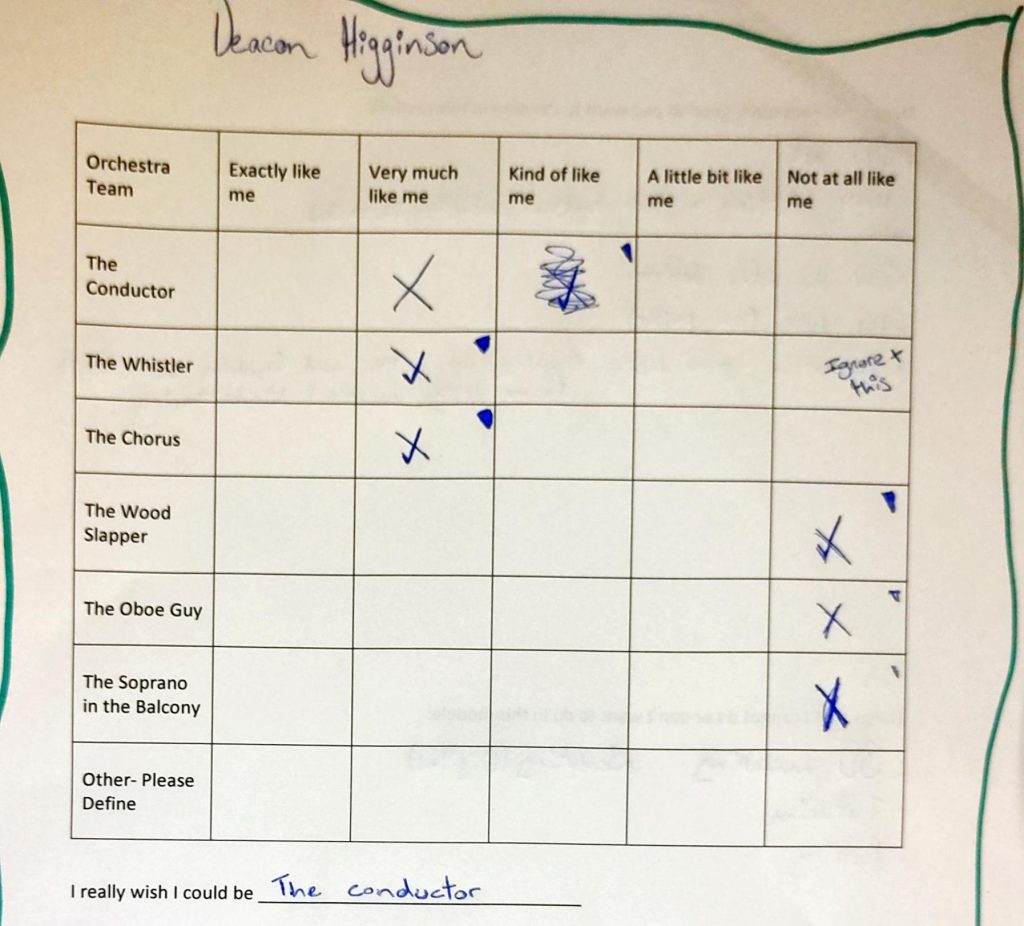
While watching the video, I found myself most closely relating to the conductor and whistler. My chosen position is Conductor. 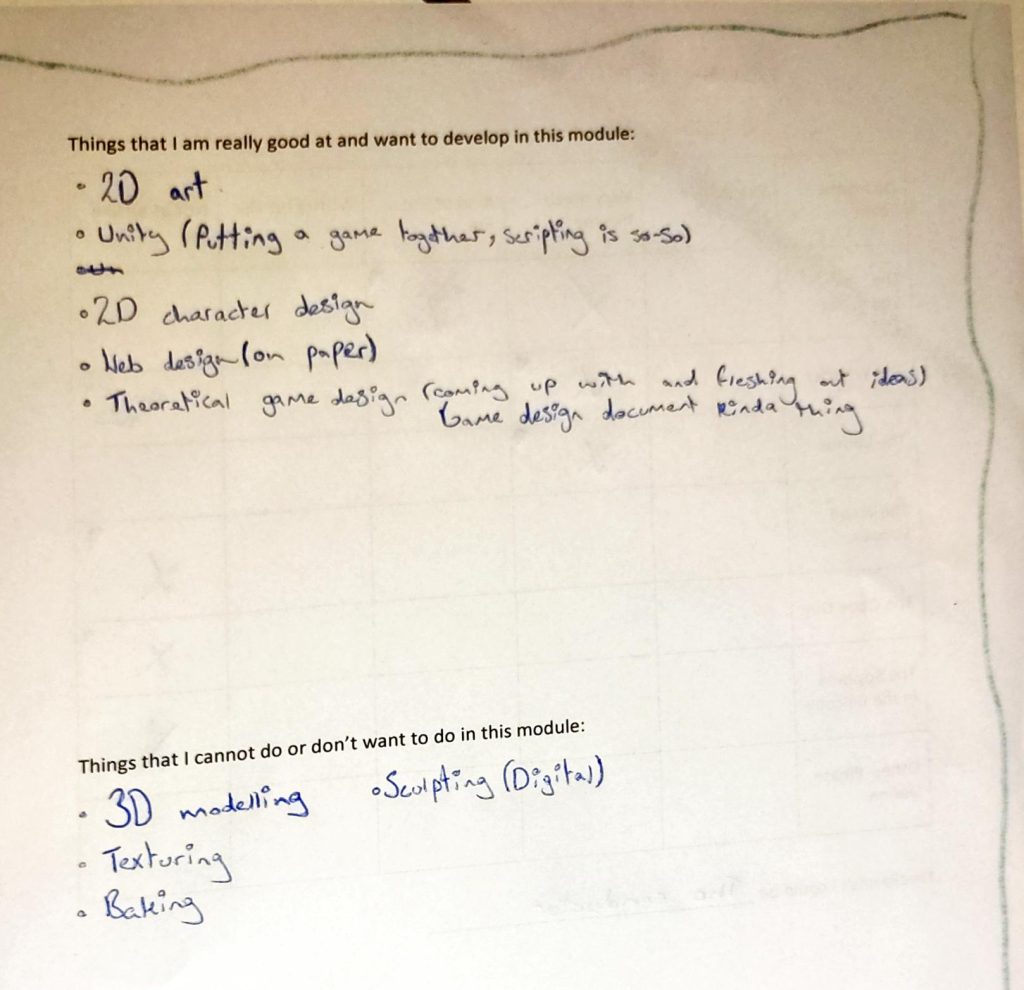
On the back of the sheet I wrote my strengths and weaknesses.
In the lab sessions, we sat opposite each other, moving clockwise every three minutes or so, introducing ourselves to each other and comparing what we had written on the sheets. There were individuals from both the Game Design and Digital Design courses so there were a diverse range of individuals with varying strengths and weaknesses and a range of different preferred roles. While talking to people, I found that close to nobody likes scripting but 2D and 3D work were equally liked. In the entire sessions, I only heard two people reference audio, something I hadn’t even thought about.
Blade Runner (1982) Directed by Ridley Scott. Warner Bros.
The Good, The Bad and The Ugly (1966) Directed by Sergio Leone. Produzioni Europee Associate.
DR Koncerthuset (2018) The Good, the Bad and the Ugly – The Danish National Symphony Orchestra (Live) [Video] Available online: https://www.youtube.com/watch?v=enuOArEfqGo [Accessed 11/02/2022]